

The City of Columbus has been interested in helping grow the downtown in the form of entertainment districts and staff want the community’s feedback in this endeavor.
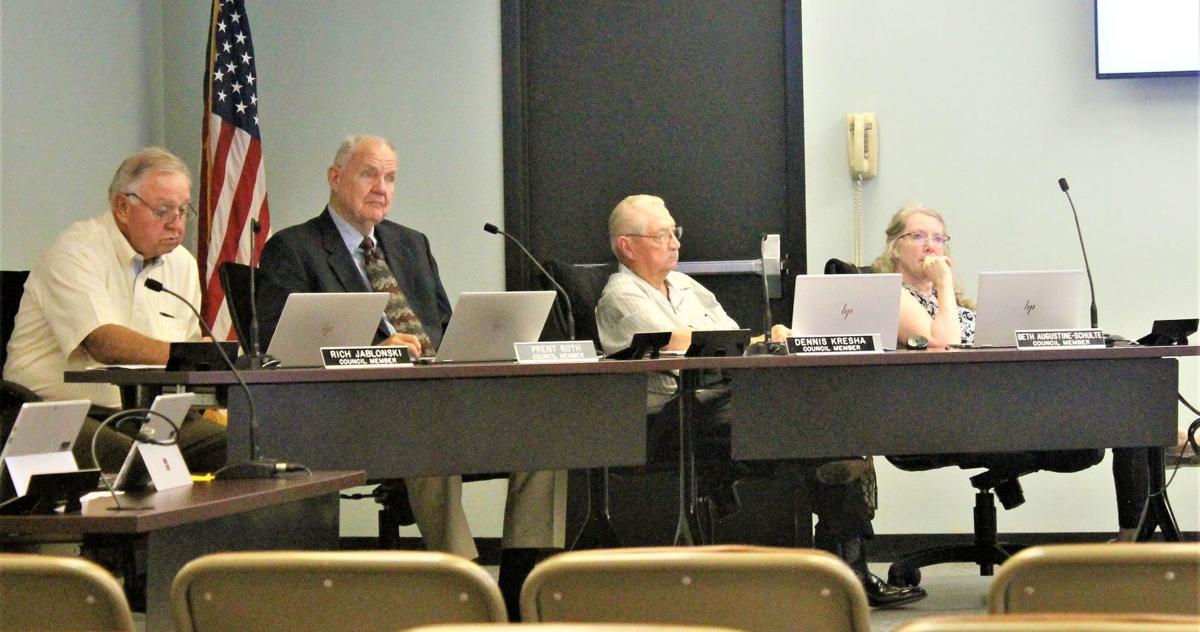
During Monday’s Columbus City Council meeting, the ordinance for creating an entertainment district (ED) in the downtown was brought up on first reading. For any person who wants to use an ED as a common area – space available for more than one person – the city would have to establish a public entertainment district first, according to City Administrator Tara Vasicek.
Earlier this year, the council approved EDs but now the members are voting on where the entertainment districts can be located.
The ordinance has to be read three times – typically measures are read twice before council votes on them – before it can be approved. City Council President Beth Augustine-Schulte – who is also the first ward council member – said the ordinance won’t waive the three reading rule because they want the community feedback.
People are also reading…
“It provides citizens a chance to speak and give their thoughts,” Augustine-Schulte said of the ordinance being read three times. “A lot of times if you bring up that one night and you vote on it that night of passage, a lot of times citizens don’t always know about it or have time to provide their feedback.
“But when we have an ordinance like this, we want to get citizen feed back. We want to hear what people say. And if there is something that comes up in the ordinance discussion, we may say we need to tweak this a little or look at this some more.”
Residents can do that during the city council’s meeting on Jan. 3, which will have a public hearing on the downtown entertainment district.
Vasicek said the proposed ED encompasses most of the downtown’s commercial properties.
“If this is passed, anybody can apply for an event as a common area within that entertainment district,” Vasicek said.
Entertainment districts permit alcoholic beverages to be consumed within a common area. Business owners, community organizations and developers can apply to the city to hold events in an ED.
To qualify, applicants have to show that the entertainment district has an area that borders the licensee’s business. The area also needs to have restricted pedestrian access and be closed to road traffic.
Augustine-Schulte said she likes the idea of having an ED as it’s an avenue in drawing folks to the downtown.
“I think it’s going to be a great thing for the community,” she said. “Just to be able to come together, to socialize (so) I think it’s going to be a positive thing in a lot of ways. … I’m looking forward to seeing how it works and how it draws our community to the downtown.”
However, Augustine-Schulte noted she has mixed feelings when it comes to the alcoholic component of the ED. She cited Platte County as having high alcohol-related accidents.
In the end, she said she believes the community will be responsible in the entertainment district. Residents have shown that kind of responsibility during Columbus Days as the event usually has a beer garden as part of the festivities, Augustine-Schulte said.
“That’s always well-attended,” she said. “It opens up to not just the people there but at the rest of the park.”
Columbus isn’t the only location to have an ED. Cities like Omaha, Lincoln and Alliance are a few examples of communities that have implemented entertainment districts.
In other business, the council approved the redistricting of the four wards. Previously, a discussion was held during the city council’s meeting on Dec. 6.
The city had until Dec. 30 to finish the redistricting and give the information to the Platte County Commissioner’s Office. Although redistricting is mandatory following every census, the city’s later-than-usual vote stems from an interruption to the 2020 census because of the COVID-19 pandemic.
Ultimately, the wards didn’t have much change but some of the areas grew thanks to Columbus’ growing population since the last census.
Vasicek said the engineering department had been working for over a month on creating the new ward boundaries. The department’s goal was to limit the changes to the lines but since the community population increased, so did the distribution, Vasicek said.
The map can be found on the city’s website.
Andrew Kiser is a reporter for The Columbus Telegram. Reach him via email at andrew.kiser@lee.net.
#pu-email-form-daily-email-article { clear: both; background-color: #fff; color: #222; background-position: bottom; background-repeat: no-repeat; padding: 15px 20px; margin-bottom: 40px; border-top: 4px solid rgba(0,0,0,.8); border-bottom: 1px solid rgba(0,0,0,.2); display: none; } #pu-email-form-daily-email-article, #pu-email-form-daily-email-article p { font-family: -apple-system, BlinkMacSystemFont, “Segoe UI”, Helvetica, Arial, sans-serif, “Apple Color Emoji”, “Segoe UI Emoji”, “Segoe UI Symbol”; } #pu-email-form-daily-email-article h1 { font-size: 24px; margin: 15px 0 5px 0; font-family: “serif-ds”, Times, “Times New Roman”, serif; } #pu-email-form-daily-email-article .lead { margin-bottom: 5px; } #pu-email-form-daily-email-article .email-desc { font-size: 16px; line-height: 20px; margin-bottom: 5px; opacity: 0.7; } #pu-email-form-daily-email-article form { padding: 10px 30px 5px 30px; } #pu-email-form-daily-email-article .disclaimer { opacity: 0.5; margin-bottom: 0; line-height: 100%; } #pu-email-form-daily-email-article .disclaimer a { color: #222; text-decoration: underline; } #pu-email-form-daily-email-article .email-hammer { border-bottom: 3px solid #222; opacity: .5; display: inline-block; padding: 0 10px 5px 10px; margin-bottom: -5px; font-size: 16px; } @media (max-width: 991px) { #pu-email-form-daily-email-article form { padding: 10px 0 5px 0; } }
from WordPress https://ift.tt/3FrT0EN
via IFTTT


0 Comments